

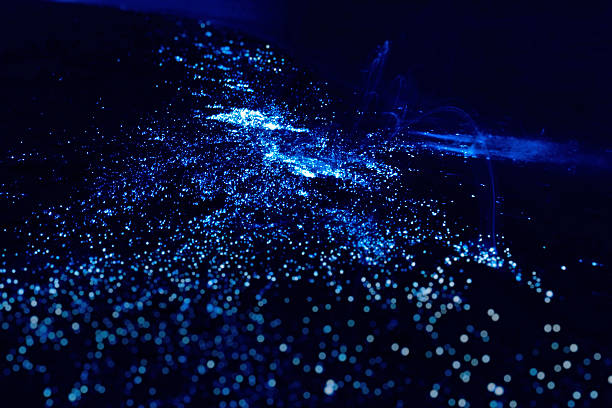
Under the cover of night, accompanied by the sound of crashing waves, the sea surface glows with a shimmering blue light, transforming the entire coastline into a vast galaxy of stars. This is caused by bioluminescent algae living in the sea, which produce light through an oxidation reaction within their bodies as a means to distract and evade predators, creating the rare phenomenon.
Only a few places around the world offer the chance to see such a spectacular sight, and Australia is home to several of them!
Where can you might see Bioluminescence in Australia
Tasmania
Tasmania is an excellent place to witness this natural marvel, as bioluminescent algae have been frequent visitors to its waters in the past 20 years.
Locations: Preservation Bay, Kingston Beach, Goat Bluff in South Arm.
New South Wales
Jervis Bay, located just over two hours’ drive from Sydney, has also been favoured by bioluminescent algae. In 2013 and 2015, this area experienced the phenomenon of “blue fluorescent seas.”
Location: Jervis Bay.
South Australia
In June 2017, bioluminescence visited the coastline of Proper Bay, south of Port Lincoln. What was once a pitch-black shore now sparkled with blue light, attracting numerous locals and photographers.
Location: Proper Bay coast in Port Lincoln.
Victoria
Gippsland Lakes in Victoria had bioluminescence for two consecutive years in 2008 and 2009. In January 2013, the bioluminescent algae graced these waters again, creating an incomparable spectacle.
Location: Gippsland Lakes.
Useful tips for those who want to see Bioluminescence in Australia
Bioluminescence can potentially appear at any time of the year. However, they are more likely to be visible during warm months, especially after rainy and overcast days.
Facebook has a “bioluminescence Australia alert” group that informs you which places will experience this phenomenon on specific days (but remember, seeing it is a matter of luck and timing).
If you are amazed by the beauty of bioluminescence, consider visiting the above-mentioned areas; perhaps you will have the chance to encounter this magical sight yourself!
Things and places to check before you go
- Check local weather forecasts and tide conditions in advance.
- Some scientists suggest that nutrients from rainfall may serve as “food” for bioluminescent algae in the seawater. Therefore, the best time to spot Bioluminescence could be after a period of rainy weather followed by clear skies.
- Join the “Bioluminescence Australia” group to stay updated on real-time Bioluminescence information.
Bioluminescence Photography Tips
For Mobile Phones: Use long exposure settings.
For Cameras: Aperture of F2.8 or higher, F4.0 works too; increase exposure time as needed.
Tripod: Nighttime photography in low light conditions, plus the sea breeze, calls for a tripod to ensure clear and sharp images.
Other Equipment: Non-slip shoes, a jacket, waterproof bags for phones, flashlights/headlamps.
 28
Jul
28
Jul
Can You Take Personal Leave for School Holidays?
 28
Jul
28
Jul
Are School Holiday Programs Tax Deductible in Australia?
 28
Jul
28
Jul